On October 12, 1492, Christopher Columbus reached what we now call San Salvador: convinced he would find Asia, he landed after months of navigation in a new continent, the Americas.
A strong emotional drive and indomitable courage pushed the navigator to make compromises, especially in the final part of his journey, with his crew, who were now discouraged by the months at sea and eager to return.
He did not give up, and this allowed him to discover what would forever change the history of modern society.
"Great enterprises," whether like Columbus' or in a broader sense, require a high level of courage from their "commanders," but also perseverance to truly hit the mark.
The real success of great companies is a mix of these factors: today we tell the story of Esselunga, the story of an entrepreneur who had the courage to do what no one in his land had the courage to do, and how he led his crew towards the future, exploration, and innovation.
Esselunga: the Italian course of the GDO (Large-Scale Distribution)
If there is one point that is hard to debate, it is the fact that Bernardo Caprotti, co-founder of Esselunga, had a sharp intuition at the time: to build supermarkets that emulated the American ones, in Italy.
An intuition that proved to be a tremendous success: starting from a headquarters on Viale Regina Giovanna in Milan, today the company has a revenue of 7 billion euros and more than 20,000 employees.
A leader in GDO in the Bel Paese, it revolutionized the concept of the store and brought the American-style supermarket model to Italian soil.
Esselunga became a pioneer of an uncharted commercial route, creating what would become the standard for any operator in the GDO sector in our country.
With a business model based on the construction of retail outlets of the same size, to facilitate supply, also thanks to a single distribution center, the efficiency and quality of the products offered have always been the core of the Esselunga model.
When courage is not enough, the desire to create and innovate comes into play to grow even more.
The courage, then
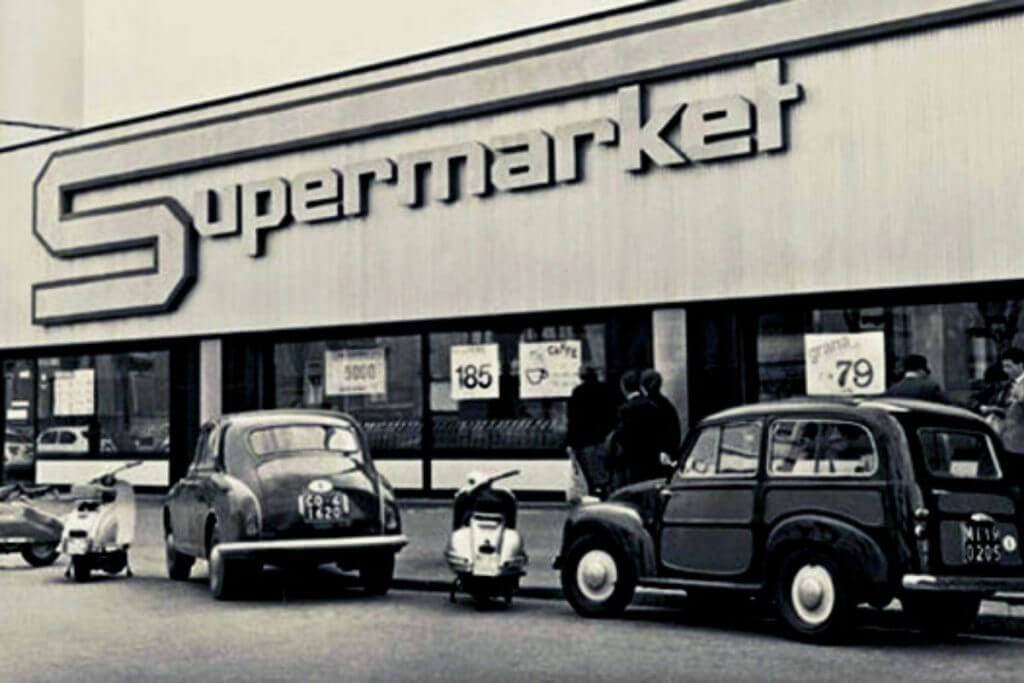
The first Esselunga was born ten years after the end of World War II, in 1957, during a historical period when people were used to small shops and grocery stores.
After studying for several years in the USA, Caprotti thought it would be a good idea to import that store model to Italy, thus changing the history of local retail from that moment on.
The Christopher Columbus of GDO opened the first store of only – we would say today – 500 m2 and without a parking lot: it was an incredible innovation for the time.
A bit like the "man of the New World," stubborn and convinced of his idea, he managed to create new commercial routes in Italy, hitting the mark on the first try: the path was set.
Unlike Christopher Columbus, Caprotti does not discover America, because he already knows it very well: he brings it to Italy, where the American dream is alive and synonymous with well-being.
Initially called Supermarkets Italiani, the company, however, left a lasting impression on people’s minds with its elongated "s", thanks to the graphic design by Max Huber. This prompted Caprotti to change the name in order to truly make a mark in the imagination of Italians. Thus, Esselunga was born.
In poco tempo l’impresa si afferma e i punti vendita crescono sempre più, ottenendo dei primati che la portano ad essere benchmark del mercato: dalla prima gastronomia in-store alla prima raccolta punti, passando per essere i primi ad utilizzare il codice a barre, la cassa laser e a inaugurare il primo servizio di spesa online già nel 2001.
This shows how being innovators, in any sector, can lead to incredible results, whether it's in food or discovering new continents.
The key to creating innovation is simple: think outside the box.
Innovation today
Today, Esselunga continues its course towards innovation: from cutting-edge recruiting and artificial intelligence, to Google voice command skills and strategic partnerships with startup accelerators, it reaffirms its leadership on the innovation front.
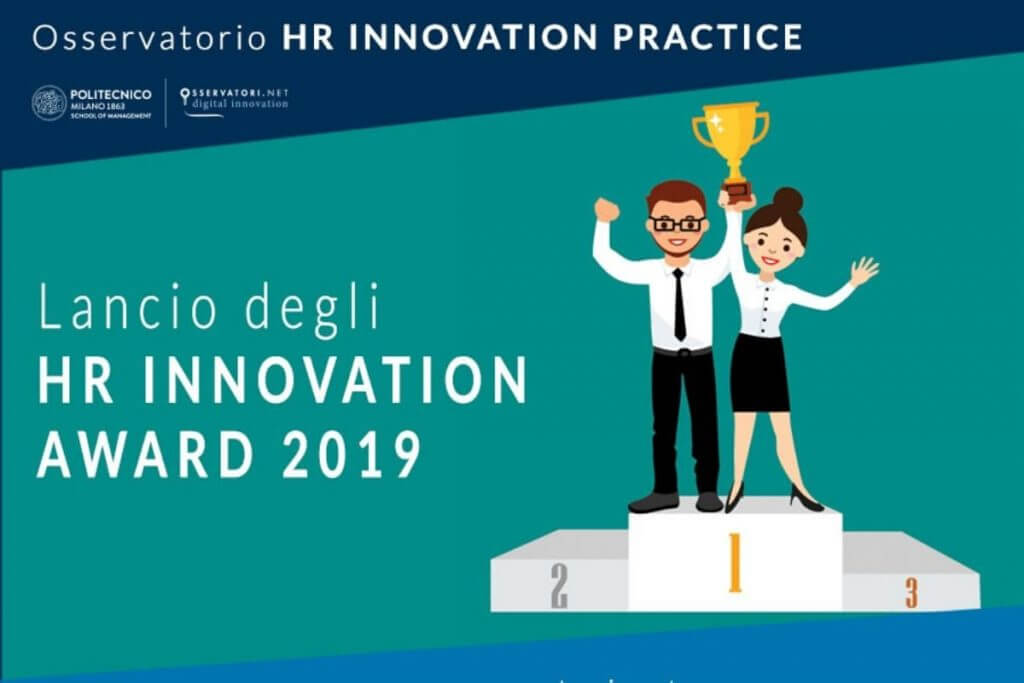
Winner of the HR Innovation Award in April 2019 in the "Recruiting" category, Esselunga was nominated for its new proposals in the hiring processes. It is not enough to have the courage to carry out initiatives; it is often necessary to analyze critical points and innovate processes.
By eliminating the phone screening step from the recruiting process and offering two video interviews – the first one pre-recorded and the second live – Esselunga aims to streamline its processes, reducing the number of in-person interviews from 20,000 per year to just 4,000, significantly optimizing its internal system.
In this way, both candidates and recruiters optimize their time, also reducing travel costs and environmental impact.
Esselunga has also set the goal of using machine learning algorithms to achieve the perfect match between the company and the candidate, between open positions and potential candidates, to honor the need for innovation that has characterized the company from the very beginning.
Plug & Play Italy: heading towards the future
Another significant step towards innovation for Esselunga is its partnership with Plug and Play, the world's largest open innovation platform and the first international startup accelerator.
Known for contributing to the launch of Google and PayPal, Plug and Play has chosen important players in the Italian landscape as partners for its opening in Milan: in addition to Esselunga, corporate partners include Lavazza, Tetra Pack, and Unicredit.
The headquarters will focus on food & beverage, and the choice of these partners is no coincidence.
To demonstrate that continued growth requires innovation and the courage to believe in it, Esselunga intends to further optimize the final sale using big data, which can be obtained through the contribution of emerging startups, while these startups will benefit from the know-how of the "Long S".
This is what distinguishes the experienced navigator from someone "at sea" for the first time: the former knows when it’s the right time to change course or align their ship in relation to the currents.
Conclusions
Esselunga is a clear example of how a man’s courage and tenacity can lead to great discoveries and achievements.
Much like Columbus, who paved the way for thousands of explorers in search of the riches of the New World, Esselunga continues to constantly innovate in a difficult and highly competitive market, while its competitors often have no choice but to emulate its actions.
The story of Esselunga teaches us that courage is important, but one must also find a way to innovate constantly, looking ahead, predicting the future, transforming it into the present, and being the architects of change.
Editorial credit for images: Esselunga exhibition at Leopolda (Marco Mori / New Press Photo)