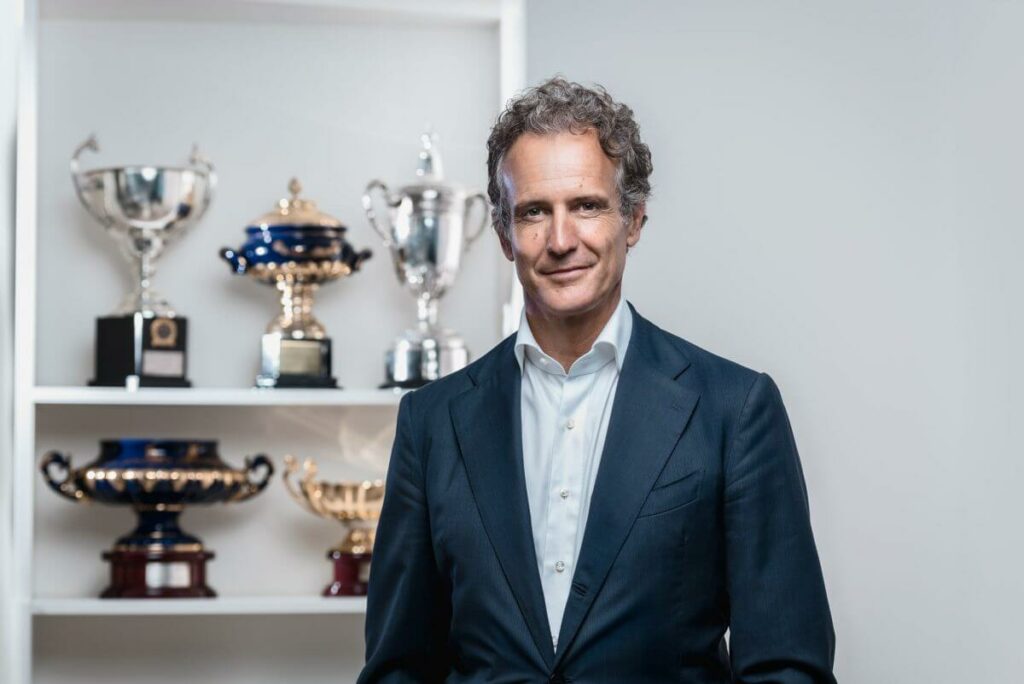
Alexa Pantanella, after a career in communication and marketing, both in agencies and companies, founded Diversity & Inclusion Speaking, a startup specializing in research and training on inclusive language. We interviewed her to understand the role language plays in the field of Diversity & Inclusion and why it is so important.

EMA PARTNERS: Why did you start focusing on the language of diversity and inclusion?
Alexa Pantanella: "I realized that, although diversity was quite valued in companies, there was no one addressing the language related to inclusion. I was thinking about the language of everyday life, not the language used in communication campaigns, but the one used in meetings, emails, hallways, and the coffee machine."
How can we achieve true inclusion if we continue speaking the language of the old company? It's not just about putting diverse people in a room to work, it's not about quotas, but about making them feel in a position to showcase their value and feel part of something. For decades, offices were populated by the same type of person: male, heterosexual, white, without disabilities. Now it is no longer the case; reality has entered the office. It's called diversity, but I advocate not using that word, but reality. The reality is that it's not just the white heterosexual male without disabilities. I asked myself how to speak in companies to ensure that those who aren't part of the old norm can truly be included.
EP: What is the relationship between Diversity and Inclusion?
AP: «Simply being there is not enough. It's not the fact that we are present or counted that defines diversity. Diversity is a snapshot: it's a fact that there are people with different backgrounds, different choices, who bring different things. But it is when we work on inclusion aspects that we choose to make this diversity count. It is said that diversity is a fact, inclusion is a choice.»

EP: Why did you focus specifically on language?
AP: «Because language is something we cannot overlook. When we work together, we talk to each other, exchange content and information. Language helps us on a cognitive level, it connects us and allows us to name people and things. Cognitively, we need to give names to things and people in order to process them. Depending on the words I use, thought goes in one direction or another: saying subordinate instead of collaborator is not the same thing.
Presenting a man as a doctor, engineer, and a woman as a lady or miss implicitly says that, in some way, even if you've brought me to the meeting, you are giving me a different role than the male colleague. These are like subtle dust particles floating in the work environment that, without us realizing it – because it's not about the intention to offend – do not foster inclusion, they don't make people feel at the same level with the same opportunities and the ability to express themselves in the same way.»
EP: How can we notice and work on these "fine dust particles"?
AP: «This is exactly what we focus on. We work on a model based on five Cs, starting with awareness.
- Awareness. If we don't start from an initial level where we notice the meaning of what we say, it's difficult to modify it. If someone explains the perception and emotion that something I use in my language evokes in them, then that can be the wake up call. And in the same way, we need to pay attention to the effect it has on us.
- Knowledge. To know as much as possible about what and who we perceive as different from us. For example, if I have no idea what it means to be a deaf person, I need to educate myself, because otherwise, I risk falling into prejudices and stereotypes.
- Confrontation. It helps us gain more knowledge. If I need to relate to someone or something I perceive as different, I must engage in dialogue, spend quality time to understand what it means to have a disability, a different sexual orientation, or another religion.
- Consistency. Language is not only about speaking, it’s also about action, and there needs to be consistency across different contexts: in a formal setting, I am very attentive, but then in an informal context, I might let myself slip into jokes or unrefined language. Consistency is also needed between the internal and external communication of the company. It may happen that the company claims to be inclusive in its language in many ways, but then inside, in meetings or emails, something different circulates.
- Consistency. It’s not enough to talk about it once to radically change the language; we need to keep working on it. It’s a job that everyone takes on in their interactions, by saying that we keep working on it, paying attention to it.

EP: Are there any exercises to start becoming aware of our language?
AP: "You can try replacing a word in a saying. This shows us how many things are socially accepted and we don't even notice, but they are a form of discrimination. For example: woman behind the wheel, constant danger. If instead of a woman, you put a person of color... black behind the wheel, constant danger. The discrimination becomes very obvious, but since these are clichés, socially accepted, we don't even notice it. It changes when you replace the gender stereotype with a racial aspect, which is not socially accepted. It's the principle of commutation. However, quick tips like these are not enough. People need to be guided because the risk is that there will only be a superficial effect, whereas it’s important to understand deeply what is happening. This is what I focus on today."